1. The Chemistry of Freezing Point Depression
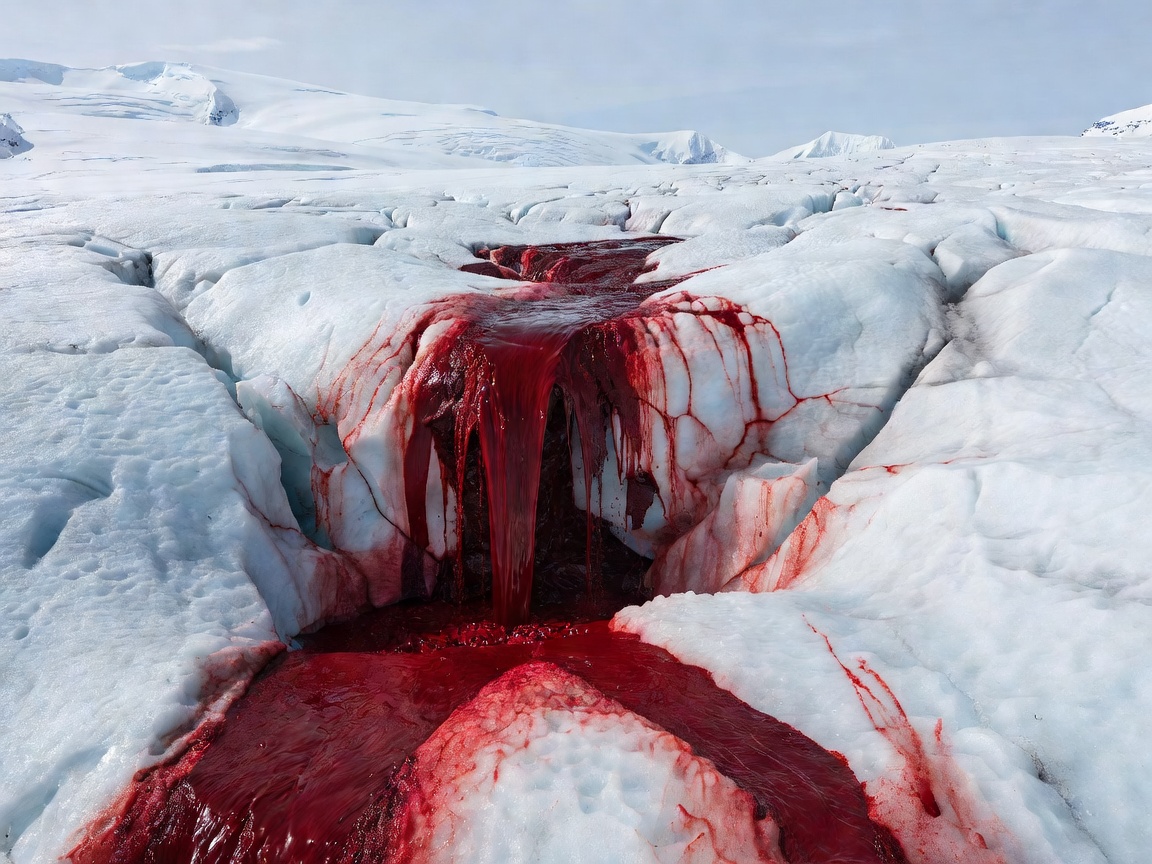
How can liquid water flow at temperatures of -17°C (1.4°F) beneath hundreds of meters of solid glacier ice? The answer lies in hypersalinity. The reservoir feeding Blood Falls was trapped approximately 1.5 to 2 million years ago during the Pliocene epoch when sea levels receded and sealed a subglacial lake.
Over eons, as ice sheets capped the water body, the freezing process squeezed out pure water ice while concentrating dissolved salts into an ultra-dense brine, three times saltier than typical seawater. This high salinity lowers the freezing point of the fluid significantly.
2. Iron Oxidation and Color Dynamics
The liquid underground is completely clear when in its anoxic state. When pressure forces the brine through ice fissures to the glacier margin, the dissolved ferrous iron (Fe²⁺) reacts instantly with atmospheric oxygen. Oxidation converts it to ferric oxide (rust), staining the outflowing stream a deep vivid blood red.
3. Astrobiological Implications
Deprived of sunlight for photosynthesis, a community of autotrophic bacteria survives in the dark reservoir by metabolizing sulfate and iron compounds. This ecosystem serves as a direct analog for potential microbial life beneath the icy crusts of Jupiter's moon Europa and Saturn's moon Enceladus.
Official Research Reference: National Science Foundation Antarctic Program Report