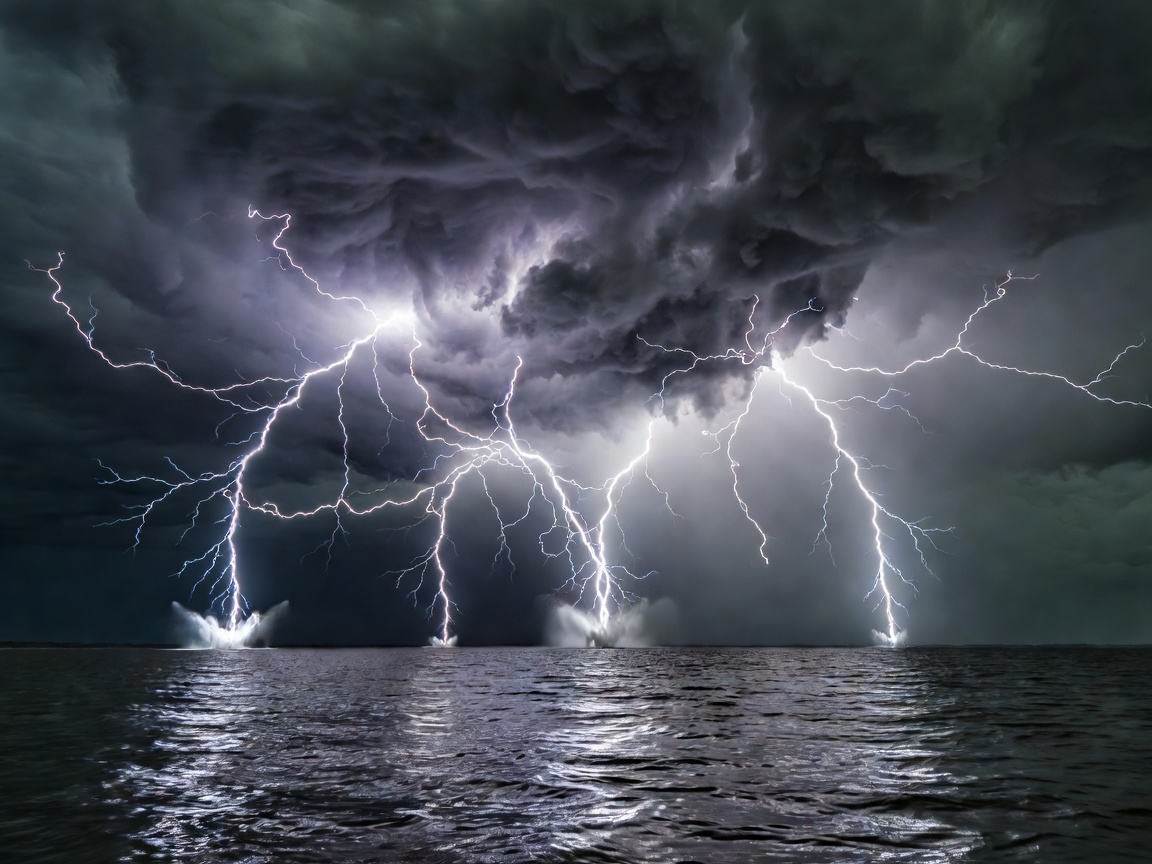
1. Geophysical Mechanics
The Catatumbo lightning phenomenon is unique on Earth. Unlike typical convective thunderstorms that form and dissipate over a matter of hours, the Catatumbo storm regenerates nightly in the exact same location. The phenomenon originates where cold mountain winds descending from the Andes and Perijá mountains collision with the warm, humid air evaporated from Lake Maracaibo.
This microclimate creates an enclosed atmospheric pressure cooker. The air masses are funnelled into a tight basin, forcing rapid vertical updrafts that reach heights over 12 kilometers into the troposphere.
2. Methane Hypotheses vs. Thermal Convection
For decades, researchers theorized that rich methane deposits leaking from underneath Lake Maracaibo's extensive oil fields increased the electrical conductivity of the overlying air columns. However, recent atmospheric modeling conducted by international meteorological teams suggests that methane concentration changes play only a minimal secondary role.
"The primary mechanism is a thermodynamic lock-in: mountain wind shear creates a perpetual low-level wind jet that forces moist air skyward continuously without exhausting the regional moisture reserve."
3. Atmospheric Impact & Ozone Generation
Due to the massive intensity and frequency of ionization during storm cycles, Relámpago del Catatumbo was historically believed to be a major localized producer of tropospheric ozone. While much of this ozone oxidizes rapidly in the humid air before reaching the stratosphere, the site remains one of the highest natural electrical power outlets on planetary record.
Official Reference Link: NASA Earth Observatory Lightning Analysis